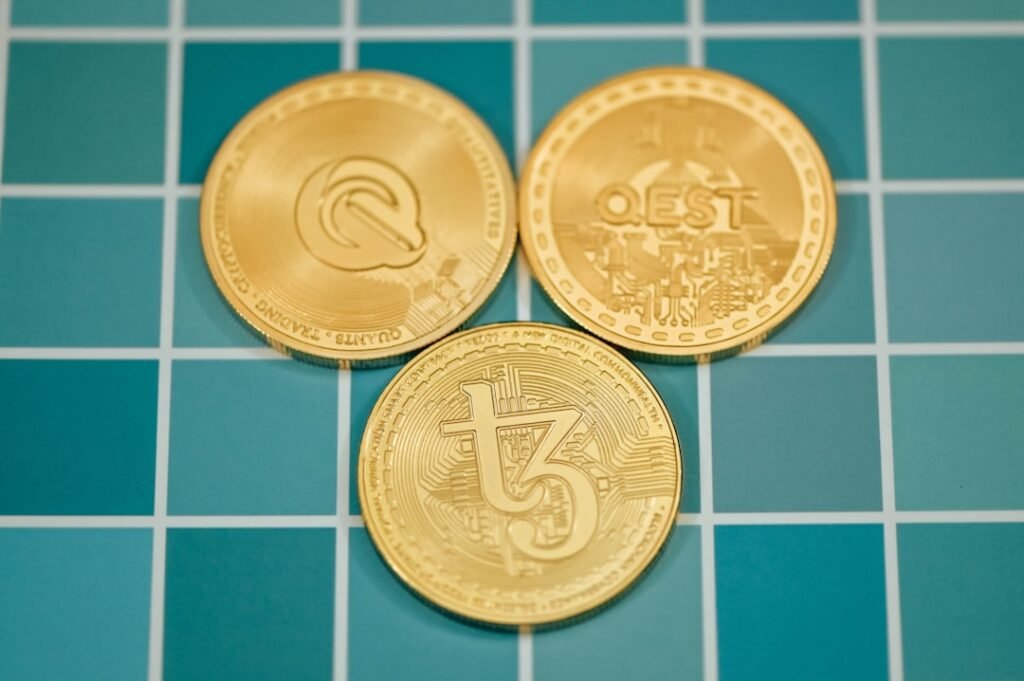
The year 2026 continues to see a dynamic and evolving Web3 landscape, driven by ongoing innovation across various sectors from decentralized finance (DeFi) to non-fungible tokens (NFTs), and decentralized autonomous organizations (DAOs). For enterprises and individual developers looking to engage with this ecosystem, selecting the right Web3 project to build upon or integrate with remains a critical challenge. This guide offers a framework for assessing Web3 projects, focusing on core functionalities, technical architectures, suitable applications, implementation considerations, and a balanced view of their advantages and limitations.
Core Functionalities and Technical Architectures
At the heart of any Web3 project evaluation lies a deep understanding of its core functionalities and the underlying technical architecture that supports them. Projects typically offer a blend of features centered around decentralization, transparency, immutability, and user ownership.
Decentralized Finance (DeFi) Protocols:
DeFi projects aim to recreate traditional financial services in a decentralized manner, often without intermediaries. Key functionalities include lending and borrowing, decentralized exchanges (DEXs), stablecoins, and derivatives.
- Technical Architecture: These protocols primarily leverage smart contracts on public blockchains such as Ethereum, Polygon, or Solana. Components often include automated market makers (AMMs) for DEXs, oracle networks for off-chain data feeds, and governance tokens for protocol changes. Security audits of smart contracts are paramount, given the financial stakes involved.
- Evaluation Focus: Assess total value locked (TVL), transaction volume, audit history, bug bounty programs, and the strength of the community and governance mechanisms. Interoperability with other protocols and multi-chain support are also crucial considerations.
Non-Fungible Tokens (NFTs) and Digital Collectibles:
NFTs represent unique digital or physical assets on a blockchain, verifying ownership and provenance. Their functionalities extend from digital art and gaming assets to tokenized real estate and intellectual property.
- Technical Architecture: NFTs are typically implemented using smart contract standards like ERC-721 or ERC-1155 on various blockchains. Associated platforms often include marketplaces, fractionalization protocols, and tools for creator royalties. Layer-2 solutions may be employed to manage transaction costs and scalability.
- Evaluation Focus: Examine the underlying blockchain’s stability and transaction costs, the security of the smart contract, the vibrancy of the artist or collector community, and the utility or roadmap associated with the NFT. Considerations should also include storage solutions for the digital asset (e.g., IPFS via services like Filecoin).
Decentralized Autonomous Organizations (DAOs):
DAOs enable community-led governance through smart contracts, allowing members to vote on proposals and manage shared treasuries. Core functions involve proposal creation, voting, and execution of decisions.
- Technical Architecture: DAOs are built around governance smart contracts defining proposal submission, voting power distribution, and execution logic. They often integrate with snapshot tools for off-chain voting to reduce gas fees, with final execution on-chain. Tokenomics play a critical role in incentivizing participation.
- Evaluation Focus: Scrutinize the governance token distribution, the transparency of voting processes, the active participation rate of members, the clarity of the DAO’s mission, and the security of its treasury management. The robustness of the underlying governance framework is key.
Web3 Infrastructure and Developer Tools:
This category includes projects providing foundational services for the Web3 ecosystem, such as decentralized storage networks, identity management solutions, oracle services, and development frameworks.
- Technical Architecture: These projects vary widely. Decentralized storage (e.g., Filecoin, Arweave) uses peer-to-peer networks and cryptographic proofs. Decentralized identity (DIDs) leverages blockchain for verifiable credentials. Oracles (e.g., Chainlink) provide secure links between off-chain data and on-chain smart contracts. Development tools typically offer SDKs, APIs, and frameworks for easier blockchain interaction.
- Evaluation Focus: For infrastructure, assess network reliability, security, scalability, and cost efficiency. For developer tools, focus on documentation quality, community support, ease of integration, and compatibility across different blockchains.
Applicable Scenarios
The selection of a Web3 project is highly dependent on the specific application scenario. Understanding where a particular project excels is critical for successful integration.
- For Financial Applications: If the goal is to build decentralized financial products or services, DeFi protocols offer the core components. For instance, a lending platform might integrate with Aave or Compound, while a trading application might use Uniswap or Curve for liquidity. The choice depends on the specific asset types, desired liquidity, and risk tolerance.
- For Digital Asset Ownership and Monetization: Projects involving digital art, gaming, fashion, or intellectual property will gravitate towards NFT platforms and associated infrastructure. Selecting the right NFT standard and marketplace depends on the intended audience, the scale of assets, and the desired level of customizability.
- For Community-Driven Initiatives and Governance: DAOs are ideal for projects requiring transparent, community-led decision-making, such as managing open-source protocols, investment funds, or content platforms. The suitability hinges on the project’s need for decentralized governance versus more centralized control.
- For Enterprise Data Management and Supply Chain: Decentralized storage and verifiable data solutions can provide enhanced transparency and security. For example, tracking goods in a supply chain could leverage a blockchain for immutable records and decentralized storage for associated documents.
- For Identity and Privacy Solutions: Decentralized identity projects offer solutions for self-sovereign identity, enabling users to control their digital information without reliance on centralized identity providers. This is particularly relevant for applications requiring robust privacy and data ownership.
Installation and Integration Recommendations
Integrating Web3 projects often involves a combination of smart contract deployment, front-end development, and infrastructure setup.
- Understand Smart Contract Interaction: Most Web3 applications interact with smart contracts on a blockchain. This requires familiarity with blockchain development tools (e.g., Hardhat, Truffle), programming languages like Solidity, and understanding gas fees.
- Utilize Wallets and Providers: Users interact with Web3 applications through cryptocurrency wallets (e.g., MetaMask, Ledger). Applications should provide clear instructions for wallet connection and transaction signing. For enterprise use, a more controlled or custom solution for private key management might be necessary.
- Frontend Development: Web3 frontends typically use libraries like Web3.js or Ethers.js to connect to the blockchain. Frameworks such as React, Vue, or Angular can be used, with specific Web3 components to streamline development.
- Backend Integration (if applicable): While Web3 emphasizes decentralization, some projects might still require centralized components for off-chain data indexing, user analytics, or complex computations that are too expensive or slow to perform on-chain. APIs provided by the chosen Web3 project are crucial here.
- Leverage Infrastructure Providers: Node providers (e.g., Infura, Alchemy) offer convenient access to blockchain data without running a full node. Decentralized storage gateways and oracle networks are also essential infrastructure elements that need to be properly configured.
- Security Audits and Best Practices: Before deployment, smart contracts should undergo rigorous security audits by reputable firms. Adopting secure coding practices, implementing multi-signature wallets for treasury management, and establishing transparent governance are paramount for long-term project viability.
- Community and Documentation: A strong developer community and comprehensive documentation are invaluable resources during integration. Active forums, tutorials, and well-maintained SDKs significantly reduce integration hurdles.
Advantages, Limitations, and Selection Advice
Every Web3 project comes with its own set of advantages and limitations. A holistic understanding is vital for informed selection.
Advantages:
- Decentralization and Censorship Resistance: Reduces reliance on single points of failure and central authorities, making services more resilient to censorship and downtime.
- Transparency and Immutability: All transactions and data recorded on a blockchain are publicly verifiable and cannot be altered, fostering trust and accountability.
- User Ownership and Control: Users often retain direct ownership of their data and assets, rather than entrusting them to corporate entities.
- Interoperability: Many Web3 projects are designed to be composable, allowing different protocols to interact and build upon each other, fostering innovation.
- Programmability: Smart contracts enable automated execution of agreements without intermediaries, opening up new possibilities for financial instruments, gaming, and digital rights management.
Limitations:
- Scalability Challenges: Many foundational blockchains still struggle with transaction throughput, leading to high fees and slow confirmation times during periods of high demand. Layer-2 solutions are addressing this but introduce complexity.
- User Experience (UX) Complexity: Web3 applications can be daunting for new users, requiring knowledge of wallets, gas fees, and cryptographic concepts.
- Regulatory Uncertainty: The regulatory landscape for Web3 is still evolving globally, posing risks and challenges for project development and enterprise adoption.
- Security Risks: Smart contract vulnerabilities, private key management issues, and phishing attacks remain significant security concerns, leading to substantial financial losses.
- Environmental Concerns: Proof-of-Work blockchains, in particular, face criticism for their energy consumption, though Proof-of-Stake alternatives offer a more sustainable model.
- Developer Tooling and Talent Gap: While improving, Web3 development still faces a talent shortage and less mature tooling compared to traditional software development.
Selection Advice:
- Define Clear Objectives: Before even looking at projects, clearly define what problem the Web3 solution is intended to solve, the target audience, and the desired outcomes.
- Prioritize Security: Due diligence on security audits, protocol robustness, and incident history is non-negotiable, especially for projects handling significant value.
- Evaluate Ecosystem Maturity: Consider the project’s age, the size and activity of its community, the number of successful integrations, and the quality of its documentation and developer support. Mature ecosystems generally offer more stability and resources.
- Assess Technical Viability and Scalability: Ensure the underlying blockchain and the project’s architecture can handle the expected load and transaction volume without prohibitive costs or delays. Consider its roadmap for scaling solutions.
- Examine Governance and Decentralization: Understand the degree of decentralization. For DAOs, assess community engagement and the transparency of governance. For protocols, evaluate how upgrades and changes are managed.
- Review Tokenomics (if applicable): If the project involves a native token, understand its utility, distribution, and incentive mechanisms. Poorly designed tokenomics can lead to instability.
- Consider Interoperability and Composability: Projects that integrate well with other protocols or support multiple chains often offer greater flexibility and wider adoption potential.
- Evaluate Team and Backers: Research the development team’s experience, track record, and the reputation of any institutional backers or investors.
- Look for Real-World Use Cases: Projects with demonstrated utility and existing adoption, beyond speculative interest, tend to be more resilient and sustainable.
- Start Small and Iterate: Given the nascent nature of Web3, it is often prudent to begin with a proof-of-concept or a smaller-scale integration before committing to a full-scale deployment.
The Web3 space in 2026 presents immense opportunities for innovation and disruption. By adopting a methodical approach to project evaluation, considering both their technical underpinnings and their alignment with specific use cases, organizations can strategically navigate this complex but rewarding frontier.