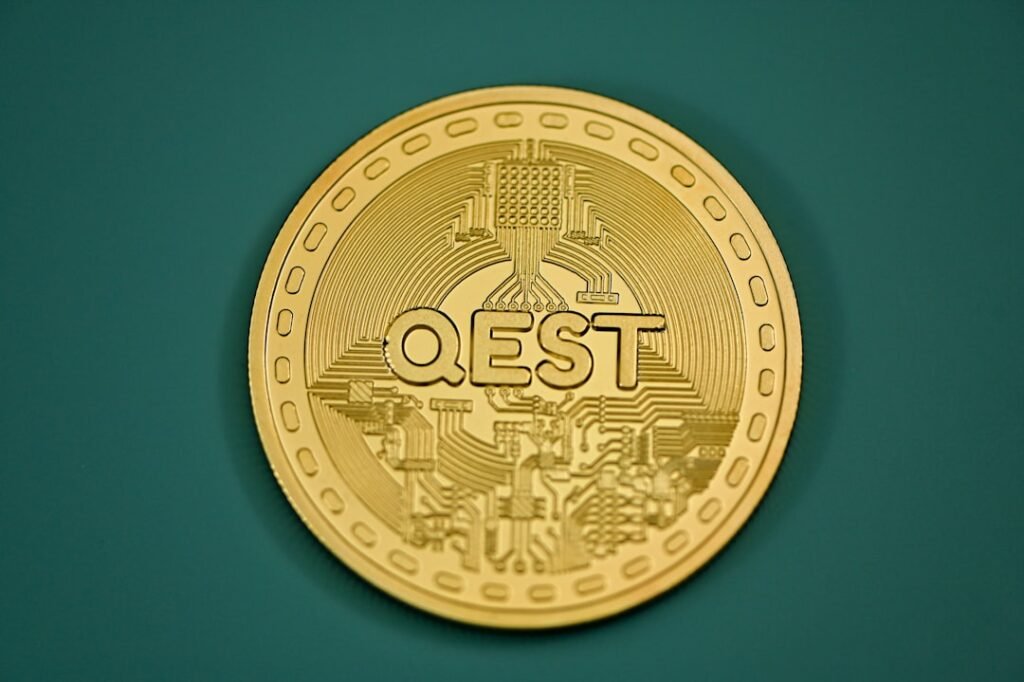
The advent of blockchain technology has undeniably captivated global attention, often presented as a panacea for everything from financial inefficiency to supply chain opacity. Heralded as a revolutionary force, its core tenets of decentralization, immutability, and transparency promise a paradigm shift across numerous sectors. Yet, as with any transformative technology, a critical examination reveals complexities and nuances often overshadowed by the hype. The question “Who truly benefits from blockchain?” is not merely rhetorical but essential for understanding its current trajectory and future implications. This in-depth analysis delves into the various facets of blockchain implementation, dissecting its promises against its practical realities to uncover the diverse stakeholders positioned to gain – and potentially lose – from its widespread adoption.
Deconstructing the Blockchain Narrative: Promises vs. Realities
At its theoretical core, blockchain offers a distributed, immutable ledger that can record transactions between parties efficiently and verifiably. This foundation underpins a broad spectrum of proposed applications, from digital currencies and decentralized finance (DeFi) to enhanced data security and transparent logistics. The initial narrative painted a picture of widespread empowerment, disintermediation, and a more equitable distribution of value.
The Allure of Decentralization and Disintermediation
One of blockchain’s most compelling promises is decentralization. By removing the need for a central authority, transactions can theoretically occur directly between participants, fostering greater autonomy and reducing reliance on traditional gatekeepers like banks, governments, or large corporations. This disintermediation could lead to:
- Lower transaction costs: Eliminating intermediaries often means reducing fees associated with their services.
- Increased speed: Direct transactions can bypass bureaucratic delays.
- Enhanced censorship resistance: A decentralized network is inherently more difficult for any single entity to control or shut down.
- Greater financial inclusion: Individuals without access to traditional banking services could participate in a global digital economy.
However, the reality of achieving true decentralization is often challenging. Many blockchain projects, particularly those designed for enterprise use, operate within permissioned environments where access and participation are controlled, resembling traditional centralized systems more closely than initially envisioned. Even public blockchains grapple with issues of mining pool concentration or validator centralization, raising questions about the practical extent of their decentralization.
Immutability and Transparency for Enhanced Trust
的 immutability of blockchain records – once a transaction is recorded, it cannot be altered – is touted as a cornerstone for building trust. This feature is particularly attractive for applications requiring high levels of auditability and data integrity, such as supply chain management, intellectual property tracking, or digital identity verification. Coupled with transparency (where all participants can verify transactions), it aims to reduce fraud and increase accountability.
While immutability offers robust data integrity, it also presents challenges. Errors, once recorded, are permanent. Moreover, true transparency on public blockchains can raise privacy concerns, as all transaction histories are publicly visible, even if pseudonymous. Solutions like zero-knowledge proofs are emerging, but balancing transparency with privacy remains a complex technical and ethical hurdle. For enterprise applications, selective transparency (where only authorized parties see certain data) is often preferred, again leading to a less “pure” decentralized model.
Who Stands to Gain? A Multi-Stakeholder Analysis
Understanding who benefits from blockchain requires moving beyond the abstract and examining its impact on various groups. The beneficiaries are diverse, ranging from early adopters and technological innovators to established entities seeking efficiency gains.
1. Technology Developers and Innovators
The most immediate beneficiaries are often the technology developers, researchers, and entrepreneurs who are building the foundational infrastructure, protocols, and applications within the blockchain ecosystem. This group includes:
- Protocol developers: Those who design and maintain the underlying blockchain networks (e.g., smart contract platforms, layer-two scaling solutions).
- Application developers: Creating decentralized applications (dApps) for various use cases, from gaming to finance.
- Cryptocurrency miners/validators: Individuals or entities who secure the network and validate transactions, earning rewards in the process.
- Consultants and educators: Experts guiding businesses and individuals through the complexities of blockchain adoption.
These individuals and organizations benefit through direct financial compensation (token grants, development bounties, service fees), intellectual property creation, and the prestige and influence associated with being at the forefront of a nascent technological wave. Early movers often capture significant market share and shape the direction of the technology.
2. Investors and Speculators
A substantial portion of the attention and capital flowing into blockchain has been driven by investors and speculators. This group includes:
- Venture capitalists and institutional investors: Funding promising blockchain startups and infrastructure projects.
- Retail investors: Purchasing and trading cryptocurrencies, tokens, and non-fungible tokens (NFTs) with the expectation of appreciation.
- Hedge funds and trading firms: Employing sophisticated strategies to profit from the volatility and liquidity of digital assets.
These beneficiaries primarily gain through capital appreciation as the value of digital assets increases. While some investments support genuine innovation, a significant portion is driven by speculative market dynamics, often fueled by hype and future potential rather than immediate utility. This segment benefits most during bull markets and periods of rapid innovation, but also faces significant risks due to market volatility and regulatory uncertainty.
3. Established Enterprises and Industries
Contrary to the narrative of disintermediation, many established enterprises are actively exploring and adopting blockchain technology. Their motivations are often centered on improving existing processes, reducing costs, and enhancing competitive advantage rather than outright disruption.
- Financial Services: Banks and payment processors are leveraging blockchain for faster cross-border payments, improved settlement times, and enhanced security in capital markets. While potentially displacing some traditional roles, it also enables new services and efficiencies for incumbents.
- 供應鏈管理: Companies use blockchain to track goods from origin to consumer, ensuring authenticity, reducing fraud, and improving logistics efficiency. This benefits large manufacturers, retailers, and logistics providers by enhancing trust and accountability.
- Healthcare: Blockchain can secure patient records, streamline data sharing between providers, and improve pharmaceutical supply chain integrity. This benefits large healthcare systems, pharmaceutical companies, and insurance providers.
- Media and Entertainment: Companies explore blockchain for digital rights management, content monetization, and combating piracy.
For these large organizations, benefits manifest as operational efficiencies, cost reductions, enhanced data security, improved auditability, and new business models. They often implement permissioned or hybrid blockchain solutions that integrate with their existing infrastructure, maintaining a degree of control and leveraging their established networks.
4. Governments and Public Sector Entities
While often perceived as resistant to decentralized technologies, governments and public sector entities are increasingly recognizing the potential benefits of blockchain.
- Digital Identity: Creating secure, verifiable digital identities for citizens.
- Land Registries: Improving the transparency and immutability of property records to reduce fraud and corruption.
- 投票系統: Exploring secure and verifiable digital voting mechanisms.
- Customs and Border Control: Enhancing trade finance and cross-border logistics.
Governments benefit from increased efficiency in public services, enhanced transparency in governance, reduced corruption, and improved data integrity. Their adoption often focuses on public infrastructure and regulatory frameworks, aiming to improve citizen services and enforce compliance.
5. Emerging Economies and Underbanked Populations
The promise of financial inclusion through blockchain is particularly resonant in emerging economies and among the underbanked.
- 匯款: Lowering the cost and increasing the speed of cross-border money transfers for migrant workers.
- Access to Finance: Providing micro-loans, insurance, and investment opportunities to individuals without traditional banking access.
- Stablecoins: Offering a hedge against hyperinflation in unstable economies.
For these populations, blockchain can represent an opportunity for economic empowerment, greater access to financial services, and a means to protect assets against economic instability. However, significant challenges remain, including digital literacy, access to technology, and regulatory hurdles.
The Unintended Consequences: Who Might Be Disadvantaged?
While many stand to benefit, the disruptive nature of blockchain also implies potential disadvantages or shifts in power dynamics for other groups.
1. Traditional Intermediaries (If Not Adapted)
The direct threat of disintermediation primarily targets traditional intermediaries who fail to adapt. This includes:
- Banks and financial institutions: If they do not integrate blockchain into their services, they risk losing market share to decentralized finance platforms or fintech innovators.
- Payment processors: Facing competition from faster, cheaper blockchain-based payment rails.
- Middlemen in supply chains: Those whose value proposition is primarily information aggregation or trust provision without adding substantial physical value.
For these entities, the consequence is a potential erosion of their business models, reduced revenue streams, and a loss of market dominance if they do not innovate or participate in the blockchain transformation.
2. Uninformed Investors and the Vulnerable
The high volatility and complex nature of the digital asset market pose significant risks, especially for uninformed retail investors.
- Market manipulation: Susceptibility to “pump and dump” schemes and other forms of market manipulation.
- Fraud and scams: The proliferation of fraudulent projects, rug pulls, and phishing attacks.
- Lack of regulatory protection: In many jurisdictions, digital assets lack the same consumer protections as traditional financial products.
These individuals often experience significant financial losses due to speculative investing, lack of understanding, or falling victim to malicious actors.
3. Centralized Power Structures (Potentially)
The long-term vision of truly decentralized blockchain applications implies a shift away from centralized control, which could challenge authoritarian regimes or highly centralized industries. If successful, truly decentralized systems could make it harder for single entities to:
- Censor information or transactions.
- Control financial flows.
- Monitor and surveil citizens without oversight.
However, as discussed, many blockchain implementations retain elements of centralization, and governments are also actively exploring how to regulate and even leverage the technology for their own purposes, suggesting a more complex interplay of power.
The Evolving Landscape: Challenges and Future Outlook
The question of “who benefits” is dynamic, evolving alongside the technology itself. Several critical challenges continue to shape the landscape:
Scalability and Interoperability
Many public blockchains face scalability limitations, struggling to process transactions at the volume required for widespread adoption comparable to traditional systems. Solutions like layer-two networks and sharding are under development, but the path to mass scalability remains complex. Furthermore, 互操作性 – the ability for different blockchains to communicate and exchange value – is crucial for a truly integrated decentralized ecosystem. Without it, siloed systems limit the overall utility.
法規的不確定性
The nascent nature of blockchain and digital assets has created a patchwork of regulatory responses globally. This uncertainty impacts innovation, investment, and mainstream adoption. Clear, balanced regulations are necessary to protect consumers, prevent illicit activities, and foster legitimate growth, but over-regulation could stifle innovation. The lack of a unified global approach creates complexities for international businesses and users.
Energy Consumption and Environmental Concerns
Certain blockchain consensus mechanisms, particularly Proof-of-Work (PoW), are highly energy-intensive, raising significant environmental concerns. While the industry is moving towards more energy-efficient alternatives like Proof-of-Stake (PoS), the environmental footprint remains a point of contention and a barrier to broader public acceptance.
User Experience and Accessibility
Despite its potential, blockchain technology can be complex and intimidating for the average user. Managing private keys, navigating decentralized applications, and understanding transaction fees often require a level of technical sophistication that is a barrier to mass adoption. Improving user experience (UX) and making the technology more accessible is paramount for realizing its broad societal benefits.
The Centralization Paradox
Perhaps the most profound challenge is the “centralization paradox.” While blockchain champions decentralization, the practicalities of development, governance, and scaling often lead to new forms of centralization. For instance, powerful mining pools, large token holders, or core development teams can exert significant influence. The ideal of a truly distributed and equally governed network remains a constant aspiration rather than a fully achieved reality.
Conclusion: A Double-Edged Sword of Innovation
Blockchain technology represents a potent force for innovation, promising a future of enhanced transparency, efficiency, and potentially, a more equitable distribution of power and value. However, the benefits are not uniformly distributed, and the landscape is far more nuanced than often portrayed.
Early adopters, technological innovators, and shrewd investors have undoubtedly reaped substantial rewards. Established enterprises and governments are selectively integrating blockchain to improve their existing operations, gaining efficiency and reinforcing their positions. Emerging economies and underbanked populations hold significant potential for empowerment, though accessibility and infrastructure remain significant hurdles. Conversely, traditional intermediaries resistant to change face disruption, while uninformed investors are vulnerable to the inherent risks of a volatile and often unregulated market.
The ultimate beneficiaries of blockchain will be determined by its continued evolution, the resolution of its inherent challenges, and the collective choices made by developers, users, regulators, and enterprises. It is not a monolithic force for good or ill, but rather a powerful tool whose impact is shaped by its implementation and governance. A critical, informed perspective is essential to navigate the complexities of this transformative technology, ensuring that its potential for broad societal benefit is maximized, while mitigating the risks of exacerbating existing inequalities or creating new forms of centralization. The “blockchain trap,” if one exists, lies in either uncritically embracing its hype or outright dismissing its potential, rather than engaging in a pragmatic assessment of its true beneficiaries and its long-term societal impact.