In an era increasingly defined by digital innovation, few technologies have captured the collective imagination quite like blockchain. Often touted as a foundational technology capable of reshaping industries and societal structures, its underlying principles offer a compelling vision for a more transparent, secure, and efficient digital future. This deep dive aims to demystify blockchain, moving beyond the hype to explore its fundamental mechanics, diverse applications, and the persistent challenges that temper its otherwise extraordinary promise.
Understanding the Genesis of a Distributed Ledger
At its core, blockchain is a distributed, immutable ledger that records transactions in a secure and verifiable manner. Imagine a digital public book where every entry, once recorded, cannot be altered or deleted. This foundational concept underpins its revolutionary potential.
The Immutable Chain: How Blocks Are Formed and Secured
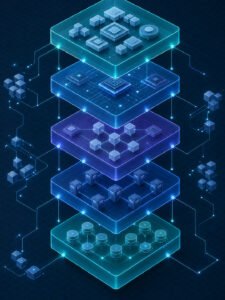
The name “blockchain” itself offers a direct clue to its architecture. Transactions are grouped together into “blocks.” Once a block is filled with data and verified, it is added to a chronological “chain” of previous blocks. Each new block contains a cryptographic hash of the previous block, creating a secure link that makes tampering extremely difficult. Any attempt to alter an older block would invalidate its hash, consequently invalidating all subsequent blocks in the chain, making such an alteration immediately detectable.
Key Components of a Block:
- Timestamp: Records the exact time the block was created.
- Transaction Data: Contains a list of all validated transactions.
- Cryptographic Hash: A unique digital fingerprint of the block’s contents.
- Previous Block’s Hash: The link that connects it to the preceding block.
- Nonce: A number used once to satisfy proof-of-work requirements.
Decentralization: The Power of Peer-to-Peer Networks
Unlike traditional centralized systems where a single entity controls the ledger (like a bank controlling financial records), blockchain operates on a peer-to-peer (P2P) network. Every participant in the network holds a copy of the entire ledger. When a new block is added, it is broadcast to all participants, who then verify its validity using consensus mechanisms. This distributed nature eliminates single points of failure, making the system highly resilient to attacks and censorship.
Advantages of Decentralization:
- セキュリティの強化: No central target for malicious actors.
- 透明性の向上: All participants can view transaction history.
- Improved Resilience: The network continues to function even if some nodes fail.
- Reduced Intermediaries: Potential to cut out third-party costs and delays.
Consensus Mechanisms: Ensuring Agreement Across the Network
For a distributed system to function reliably, all participants must agree on the validity of transactions and the order of blocks. This is achieved through consensus mechanisms. The most well-known is Proof-of-Work (PoW), used by early blockchain implementations, where “miners” compete to solve complex computational puzzles to validate transactions and add new blocks. The first to solve the puzzle earns the right to add the next block and receive a reward.
While robust, PoW can be energy-intensive. Newer blockchain iterations and evolving designs often employ alternative mechanisms such as Proof-of-Stake (PoS), where validators are chosen based on the amount of cryptocurrency they “stake” as collateral. Other mechanisms include Delegated Proof-of-Stake (DPoS), Proof-of-Authority (PoA), and various Byzantine Fault Tolerance (BFT) derivatives, each offering different trade-offs in terms of security, scalability, and decentralization.
Beyond Cryptocurrency: Diverse Applications and Transformative Use Cases
While blockchain first gained prominence through its association with digital currencies, its potential extends far beyond monetary transactions. Its core characteristics – immutability, transparency, and decentralization – make it suitable for a vast array of applications across numerous sectors.
Supply Chain Management: Enhancing Transparency and Traceability
One of the most compelling applications of blockchain lies in revolutionizing supply chains. By recording every stage of a product’s journey – from raw material sourcing to manufacturing, shipping, and retail – on an immutable ledger, companies can achieve unprecedented levels of transparency. This allows for instant verification of provenance, combating counterfeit goods, improving product recalls, and ensuring ethical sourcing. Consumers, too, can gain deeper insights into the products they purchase, fostering greater trust.
Benefits for Supply Chains:
- Authenticity Verification: Combat counterfeiting and fraud.
- Real-time Tracking: Pinpoint product location and status.
- Improved Compliance: Easier to meet regulatory requirements.
- Enhanced Consumer Trust: Provide verifiable product origins.
Healthcare: Securing Patient Data and Streamlining Operations
In healthcare, blockchain offers solutions for securing sensitive patient data, facilitating interoperability between disparate systems, and managing pharmaceutical supply chains. Patient medical records, when stored on a blockchain, can be made tamper-proof and accessible only to authorized personnel, with patients having greater control over who views their information. Clinical trial data can be recorded immutably, enhancing the integrity and transparency of research.
Healthcare Applications Include:
- Secure Electronic Health Records (EHRs): Immutable and patient-controlled access.
- Drug Traceability: Prevent counterfeit medications and manage recalls.
- Claims Processing: Streamline insurance claims with transparent records.
- Clinical Trial Data Management: Enhance data integrity and auditability.
Legal and Governance: Smart Contracts and Digital Identities
The concept of スマートコントラクト represents a significant leap forward in legal and governance applications. These are self-executing contracts with the terms of the agreement directly written into code. Once the predefined conditions are met, the contract automatically executes, eliminating the need for intermediaries and reducing potential disputes.
Furthermore, blockchain holds promise for creating self-sovereign digital identities. Individuals could own and control their digital identities, granting access to specific information without relying on centralized identity providers. This could revolutionize online authentication, voting systems, and property registries.
Impact on Legal and Governance:
- Automated Agreements: Smart contracts execute upon conditions met.
- Reduced Litigation: Clear, self-enforcing contract terms.
- Digital Voting Systems: Enhance transparency and security in elections.
- Immutable Land Registries: Prevent property fraud and simplify transfers.
Finance and Banking: Remittance, Trade Finance, and Tokenization
Beyond cryptocurrencies, traditional finance is exploring blockchain for its potential to streamline cross-border payments, reduce settlement times, and improve trade finance. Blockchain can lower transaction costs and accelerate remittances, making international transfers faster and cheaper. The tokenization of assets – representing real-world assets like real estate, art, or stocks as digital tokens on a blockchain – opens up new avenues for liquidity, fractional ownership, and easier transfer of value.
Navigating the Road Ahead: Challenges and Considerations
Despite its profound potential, blockchain technology is not without its hurdles. Realizing its full promise requires addressing significant challenges related to scalability, regulatory clarity, energy consumption, and user adoption.
Scalability and Transaction Throughput
Early blockchain designs, particularly those employing PoW, struggle with scalability. The number of transactions per second (TPS) they can process is often significantly lower than traditional payment networks. As adoption grows, the network can become congested, leading to slower transaction times and higher fees. Innovations like layer-2 solutions (e.g., Lightning Network), sharding, and alternative consensus mechanisms are actively being developed to address these limitations.
Regulatory Uncertainty and Legal Frameworks
The decentralized nature of blockchain presents a challenge for existing regulatory frameworks. Governments worldwide are grappling with how to classify and regulate digital assets, smart contracts, and decentralized autonomous organizations (DAOs). A lack of clear, harmonized regulations can hinder innovation and widespread adoption, as businesses remain cautious about operating in an ambiguous legal environment. Striking a balance between fostering innovation and protecting consumers and financial stability is a delicate act.
Energy Consumption and Environmental Concerns
The energy intensity of certain blockchain networks, particularly those relying on PoW, has raised significant environmental concerns. The computational power required to mine blocks consumes substantial amounts of electricity, leading to a considerable carbon footprint. While newer consensus mechanisms like PoS are designed to be far more energy-efficient, the perception of blockchain as an energy-guzzler remains a barrier to broader acceptance and sustainability goals.
User Experience and Interoperability
For blockchain technology to achieve mainstream adoption, it needs to become more user-friendly. The complexity of managing cryptographic keys, understanding wallet security, and navigating decentralized applications (dApps) can be daunting for the average user. Additionally, the fragmented blockchain landscape, with multiple independent chains, necessitates solutions for 相互運用性 – the ability for different blockchains to communicate and exchange data seamlessly. Projects focused on cross-chain bridges and common standards are crucial for building a cohesive blockchain ecosystem.
Security Vulnerabilities and Governance Risks
While the underlying cryptography of blockchain is robust, security risks can still arise from smart contract vulnerabilities (bugs in code), private key management failures, and attacks on ancillary systems. The immutable nature of blockchain means that once a faulty transaction or vulnerable contract is deployed, rectifying it can be extremely challenging or even impossible. Furthermore, decentralized governance models, while empowering, can also introduce complexities in decision-making and rapid response to emergent threats.
The Horizon of Innovation: A Glimpse into the Future
As we stand in 2026, the blockchain ecosystem continues its rapid evolution. The initial fervent speculation has given way to more pragmatic development and application. The focus is shifting from simply launching new tokens to building tangible infrastructure and solving real-world problems.
Emerging Trends and Future Directions:
- Enterprise Adoption: Growing integration of private and permissioned blockchains by corporations for supply chain, finance, and data management.
- Decentralized Finance (DeFi) Maturation: DeFi protocols becoming more robust, secure, and integrated with traditional financial instruments, offering alternative lending, borrowing, and trading platforms.
- Web3 Evolution: The development of a decentralized internet where users have greater control over their data and online interactions, powered by blockchain and related technologies.
- Digital Identity and Privacy: Blockchain-based solutions offering enhanced privacy and control over personal data, moving towards verifiable credentials and self-sovereign identity.
- Sustainability Focus: A continued drive towards more energy-efficient blockchain designs and carbon-neutral operations.
- Interoperability Solutions: The maturation of protocols and bridges enabling seamless communication and asset transfer between different blockchain networks.
The journey of blockchain from a niche cryptographic innovation to a potential cornerstone of the digital economy is still unfolding. Its promise is not merely a theoretical construct but a tangible vision for a world where trust is distributed, data is secure, and transactions are transparent. While significant challenges remain, the dedication of developers, researchers, and industries worldwide suggests that the curtain has only just begun to rise on blockchain’s truly transformative act. The coming years will undoubtedly witness its continued evolution, refining its capabilities and expanding its reach, ultimately redefining how we interact with information and value in the digital age.