The digital frontier is constantly evolving, driven by innovations that reshape how we interact, transact, and trust. Among these, blockchain technology, often discussed yet frequently misunderstood, stands as a foundational layer, quietly architecting the future. Far from being a mere buzzword associated solely with digital currencies, blockchain represents a paradigm shift in data management, security, and decentralized governance. This article delves into the profound impact of blockchain, exploring its underlying principles, diverse applications, and the transformative potential it holds for various sectors, positioning it as an indispensable element in the architecture of tomorrow’s interconnected world.
Understanding the Genesis: Why Blockchain Emerged
The internet revolutionized information sharing, but it also highlighted fundamental challenges related to trust, data immutability, and centralized control. The traditional digital infrastructure relies heavily on intermediaries – banks, governments, social media platforms – to validate transactions, secure data, and maintain records. While these systems have served us for decades, they are susceptible to single points of failure, data breaches, censorship, and inefficiencies.
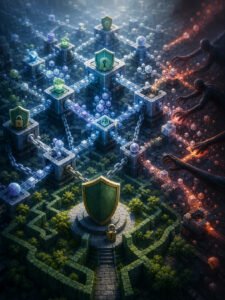
The genesis of blockchain can be traced to a desire to address these vulnerabilities. It emerged as a solution to create a decentralized, transparent, and tamper-proof ledger. Imagine a digital notebook where entries, once recorded, cannot be altered or deleted, and every participant holds an identical copy. This unchangeable record-keeping mechanism, secured by cryptographic principles, forms the bedrock of blockchain. It fundamentally redefines trust, shifting it from intermediaries to the network itself, secured by mathematical proofs rather than institutional assurances.
Core Principles of Blockchain Technology
To appreciate blockchain’s architectural significance, it’s crucial to understand its core principles:
- 分散化: Unlike traditional databases residing on a single server, a blockchain network is distributed across numerous computers (nodes). This eliminates single points of failure and enhances resilience. No single entity controls the entire network, empowering participants with greater autonomy.
- 不変性: Once a transaction or data block is added to the chain, it cannot be altered or removed. This characteristic is achieved through cryptographic hashing, where each new block contains a cryptographic hash of the previous block, creating an unbreakable link. Any attempt to tamper with an earlier block would invalidate all subsequent blocks, making such an act easily detectable.
- 透明性: In a public blockchain, all transactions are visible to every participant on the network. While individual identities may be pseudonymous, the transactional data itself is open for inspection, fostering unprecedented levels of accountability. This allows for rigorous auditing and verification without compromising privacy for those who choose not to reveal their identity.
- Security: Cryptographic algorithms are employed at every stage of the blockchain process, from securing individual transactions to linking blocks. This robust cryptographic foundation makes it incredibly difficult for malicious actors to compromise the network or falsify data.
- コンセンサスのメカニズム For new blocks to be added to the chain, a consensus mechanism must be reached among the network participants. This ensures that all nodes agree on the validity of transactions and the correct order of blocks. Popular mechanisms include Proof of Work (PoW) and Proof of Stake (PoS), each with its own advantages and trade-offs.
Beyond Cryptocurrency: Diverse Applications and Impact
While blockchain gained initial prominence through digital currencies, its potential extends far beyond financial transactions. Its ability to create immutable, transparent, and secure records is proving invaluable across an astonishing array of industries, acting as a silent, yet powerful, architect of new operational paradigms.
Reshaping Supply Chains and Logistics
The complexity of global supply chains often leads to inefficiencies, lack of transparency, and difficulty in tracing products. Blockchain offers a solution by creating an unchangeable record of every step in a product’s journey – from raw materials to manufacturing, shipping, and retail. This provides:
- Enhanced Traceability: Consumers can verify the origin and authenticity of products, improving trust and combating counterfeiting.
- 透明性の向上: All stakeholders in the supply chain gain real-time visibility into product movement and key data points.
- Improved Efficiency: Automation through smart contracts can streamline processes like customs clearance and payments, reducing delays and administrative overhead.
- Ethical Sourcing Assurance: Companies can demonstrate ethical sourcing practices and sustainable production, aligning with growing consumer demands.
Revolutionizing Healthcare and Data Management
The healthcare sector grapples with challenges related to data interoperability, patient privacy, and secure record-keeping. Blockchain’s attributes address these critical concerns:
- Secure Patient Records: Immutable electronic health records (EHRs) can be stored on a blockchain, ensuring data integrity and preventing unauthorized alterations.
- Enhanced Data Sharing: Patients can grant controlled access to their medical data to healthcare providers, researchers, and insurance companies, fostering better coordination of care while maintaining privacy.
- Drug Traceability: From manufacturing to distribution, blockchain can track pharmaceuticals, preventing counterfeit drugs from entering the supply chain and ensuring medication authenticity.
- Clinical Trial Management: Transparent and auditable records of clinical trials can improve data integrity and accelerate drug development processes.
Transforming Finance and Banking
Even beyond digital currencies, blockchain is poised to fundamentally alter traditional financial systems:
- Faster and Cheaper Cross-Border Payments: Traditional international remittances are often slow and expensive due to multiple intermediaries. Blockchain-based solutions can facilitate near-instantaneous transfers with significantly lower fees.
- 分散型金融(DeFi): This burgeoning ecosystem allows for financial services like lending, borrowing, and trading to be conducted directly between parties without traditional financial institutions, increasing accessibility and reducing costs.
- Fraud Reduction: The immutable nature of blockchain transactions makes it extremely difficult to commit financial fraud, enhancing security in banking operations.
- Asset Tokenization: Real-world assets, such as real estate, art, or commodities, can be represented as digital tokens on a blockchain, enabling fractional ownership, increased liquidity, and simplified transfer of ownership.
Empowering Digital Identity and Governance
The concept of a secure and self-sovereign digital identity is a cornerstone of future digital interactions. Blockchain provides the framework:
- Self-Sovereign Identity: Individuals can control their own digital identities and share verifiable credentials on their terms, rather than relying on centralized authorities.
- Voting Systems: Blockchain can create transparent, verifiable, and tamper-proof voting systems, combating electoral fraud and increasing public trust in democratic processes.
- Intellectual Property Protection: Creators can timestamp and register their intellectual property on a blockchain, establishing irrefutable proof of ownership and preventing infringement.
- Secure Record Keeping for Governments: From land registries to birth certificates, government records stored on a blockchain can ensure authenticity, prevent fraud, and streamline administrative processes.
The Architectural Evolution: Challenges and Future Outlook
While blockchain’s potential is immense, its journey to widespread adoption and integration into the architectural fabric of tomorrow is not without its challenges. These include:
- スケーラビリティ: Current blockchain networks, particularly public ones, can face limitations in processing a high volume of transactions per second, bottlenecking their ability to handle widespread adoption. Ongoing research and development in areas like sharding, layer-2 solutions, and alternative consensus mechanisms are addressing these issues.
- 規制の不確実性: The decentralized and nascent nature of blockchain technology has led to a constantly evolving regulatory landscape. Clarity and consistent global frameworks are crucial for fostering innovation and encouraging institutional adoption.
- 相互運用性: Different blockchain networks often operate in isolation, hindering seamless communication and data exchange between them. Developing standards and protocols for interoperability is vital for creating a truly interconnected digital ecosystem.
- エネルギー消費量: Certain consensus mechanisms, particularly Proof of Work, are energy-intensive. The transition to more environmentally friendly alternatives like Proof of Stake and the development of energy-efficient solutions are critical concerns.
- ユーザー・エクスペリエンス(UX): For mass adoption, blockchain applications need to be intuitive and user-friendly, abstracting away the underlying technical complexities.
Despite these hurdles, the trajectory of blockchain technology points towards an increasingly influential role. As research and development continue at a rapid pace, we can anticipate significant architectural advancements:
- Hybrid Blockchains: The emergence of hybrid models combining the best features of public and private blockchains will cater to diverse industry needs, offering a balance of transparency, control, and efficiency.
- Quantum Security: The advent of quantum computing poses a potential threat to current cryptographic standards. Quantum-resistant cryptographic algorithms will be integrated into future blockchain designs to ensure long-term security.
- Enhanced AI Integration: The synergy between AI and blockchain will unlock new possibilities, with AI optimizing blockchain network performance, enhancing security, and facilitating data analysis on immutable ledgers.
- Sustainable Blockchain Solutions: A strong focus on energy efficiency and sustainable practices will drive the development of greener blockchain technologies, reducing their environmental footprint.
- Greater Mainstream Adoption: As the technology matures and user-friendly interfaces become commonplace, blockchain will seamlessly integrate into our daily lives, often operating in the background, unnoticed but indispensable.
Conclusion: The Quiet Revolution
Blockchain, in its essence, is more than just a technological innovation; it is a fundamental shift in how we perceive and manage digital trust. It is the unseen architect meticulously laying the groundwork for a future characterized by enhanced transparency, unparalleled security, and decentralized empowerment. From securing critical supply chains to democratizing financial services and safeguarding digital identities, its influence is pervasive and ever-expanding.
While the journey ahead involves navigating complexities and overcoming challenges, the foundational principles of blockchain – decentralization, immutability, transparency, and security – position it as an indispensable element in building the digital infrastructure of tomorrow. Its quiet revolution is steadily transforming industries, redefining interactions, and ultimately, constructing a more resilient, equitable, and trustworthy digital world for generations to come. The future is being built, block by block, and blockchain is the silent, yet powerful, force guiding its architecture.